

Short and sweet this week

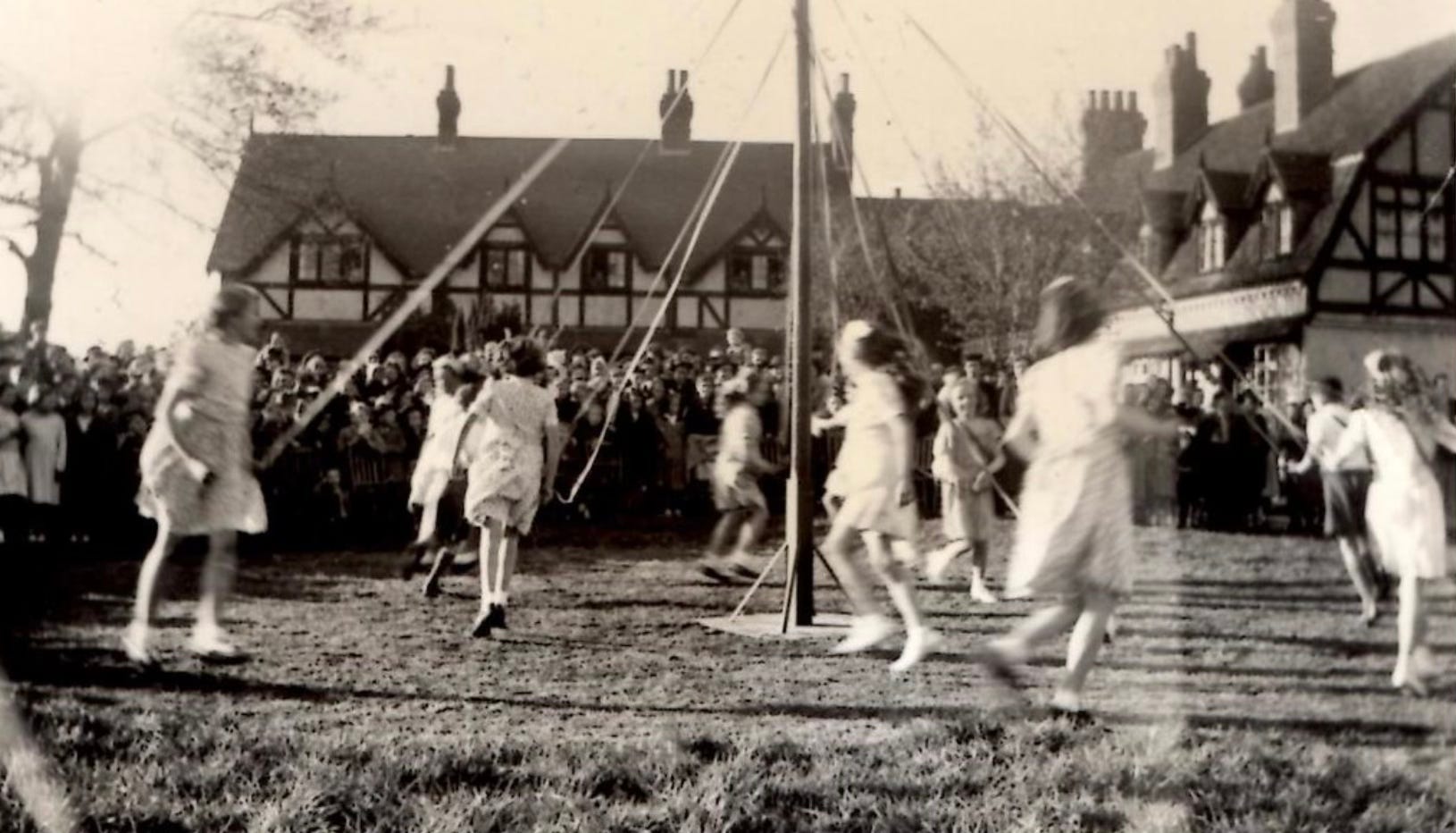
Hallo, and a happy May day weekend to you. I hope you have been dancing, perhaps a around a maypole, and celebrating the peak of spring with all its fertility and growth and paying attention to all the trees in their season of glory. At least we have the freedom to celebrate with our May Queens and Morris dancing, our Jack-in-the-Greens and ‘Obby ‘Osses, and perhaps a small fire in the backyard to honour the pagan festival of Beltane. The Puritans (who else?) banned all this ‘heathenish vanity’ in 1644 and May day celebrations disappeared until the restoration of Charles II, who true to Merry Monarch fame, had a huge maypole of some 120 feet erected on the Strand in 1661 and encouraged the dancers to return. Sadly, by 1713 the Maypole was decayed and unstable, with only the bottom twenty feet still standing. It was pulled down and a new one erected further west, almost opposite Somerset House. This also began to decay and was taken down in 1718, whereupon it was purchased by Sir Isaac Newton for a friend in Wanstead, who used it to support what was then the largest telescope in Europe. So a nice little story of art supporting science!
My sister has been visiting this week and so I haven’t been doing very much except chatting and strolling about (weather permitting). That nasty little north/north east wind was back, this time with gusts up to 40 miles per hour so at times it was pretty cold even though the sun shone, occasionally, from clear blue skies. My sister NEVER STOPS talking so it’s quite tiring, but aways lovely to see her and catch up on everything. She’s two and a half years older than me and, you know, you can’t tell when we wont be able to meet anymore. She comes down from the midlands by train, but comes a totally convoluted route and it takes her hours. She is a creature of habit, and once she has something that she’s comfortable with, it’s hard to change her mind! She went home on Thursday lunchtime but as friend Alan is coming down on Tuesday for a few days the weekend has been cleaning up and bedlinen washing etc. It’s all go in the Girvin household but not very exciting for this post!

On Friday we put off the cleaning and went to Toby Buckland’s Garden Festival at Powderham Castle. It’s an annual thing, small and not over-advertised so it’s never packed out and there are very good plant stalls; a few stalls of garden accessories, food and drink stalls, and crafts etc. I bought some crocosmia (Harlequin) and some geum (Princess Juliana). We had a very pleasant saunter around for a couple of hours. The grounds of the castle are lovely and there was much lilac in bloom in every shade of mauve. The rain held off for most of the time, the coffee was good and the cakes sublime. I saw Mark Diacono there but he was chatting to someone so I didn’t interrupt to say hallo. Plus I wasn’t sure I could do that thing of introducing myself to a total stranger just because I ‘know’ him from Substack!
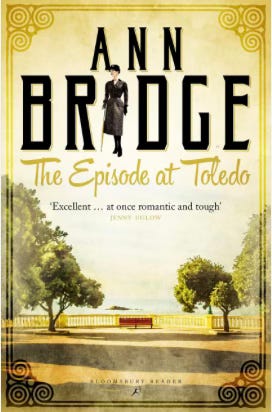
This week’s reading has been pleasantly light. Ann Bridge’s The Episode at Toledo, the sixth in the Julia Probyn mystery series. I think, perhaps, this is the weakest I’ve read so far and only just held my attention. It suffers from the lack of Julia Probyn herself who, post-natal and comfortably recovering at her cousin’s estate in Scotland, appears only tangentially, to offer helpful advice by post. The action, such as it is, utilises two of Julia’s friends whom we have met in previous books—Luzia, the Portuguese Contessa, and Hetta, the feisty Hungarian refugee. Before one can say ‘knife’ Hetta has overheard and subsequently uncovered a communist plot to assassinate a visiting American Admiral. The plot is foiled, of course, by the intervention of Portuguese noblemen, British Intelligence officers, American attachés, but mostly by Hetta’s exploits of derring-do. As usual, Bridge tells a ripping yarn of European diplomacy tempered by descriptions of the Spanish countryside and places of local interest, and a dash of blossoming romance. It was okay but I did slightly wonder just how many Hungarian communist plots one young woman can expose single-handedly. Nevertheless, Bridge is a good storyteller and I am hoping that the seventh book in the series, The Malady in Madeira, brings back witty, nonchalant Julia, the woman who is always one step ahead of MI6. All of these books are set in the late 1950s and 1960s, but the style, characters and attitudes always have me imagining them firmly between the two world wars. They’re rather fun.
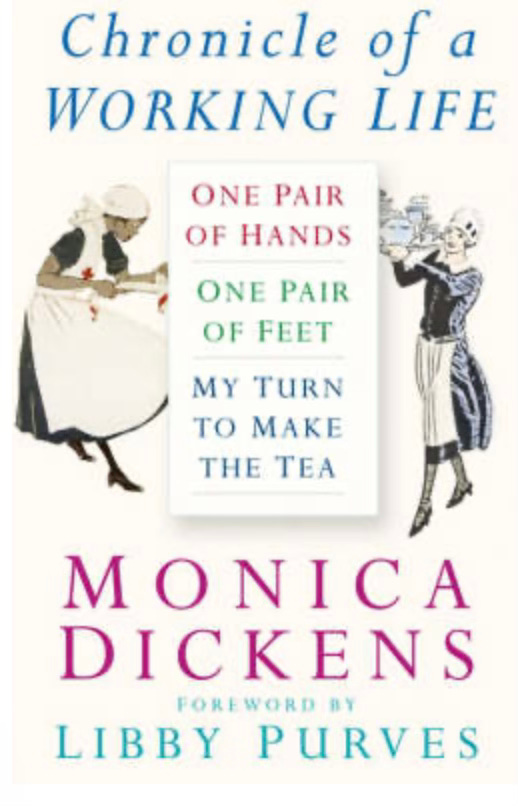
Next up will be an omnibus of Monica Dickens, combining her ‘employment’ novels: One Pair of Hands, One Pair of Feet and My Turn To Make The Tea. Dickens was Charles Dickens’s great-granddaughter and a prolific author, publishing some 45 novels between 1939 and her death in 1977. She wrote the popular children’s Follyfoot series, which some of you may remember from the tv series in the early 1970s. Anyway, depending on how far I get into it I shall write more next week. And then I must get into the non-fiction TBR pile.
That’s all for this week. I shall be back next weekend with more of the same. Take care and I’ll write soon.x

I remember being charmed by a reading of a book by Monica Dickens decades ago on radio 4, but I can't remember which one... I await your comments on her writing with interest!
That garden festival sounds perfect. I would also want to say hello to Mark Diacono too, although of course he wouldn’t know me from Adam!