

Shellfish, Beech trees, and Macmillan brothers

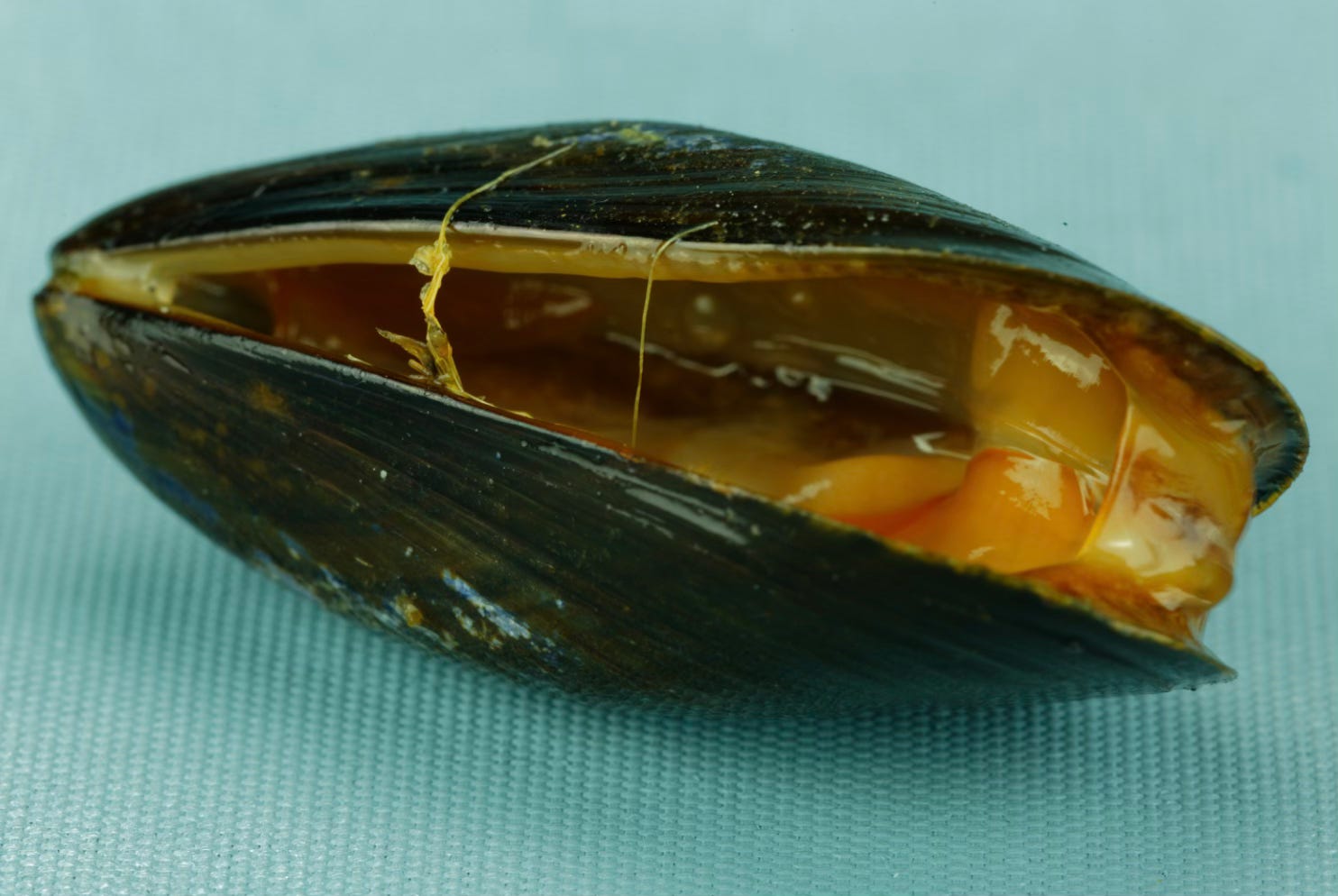
Hello, everyone. After the recent mildness, this week’s weather has been very cold and rather beautiful. Crystal clear days with bright sunshine brings a sparkle that can really only happen in winter. On Tuesday from the cliff top one could see the whole width of Lyme Bay set out under a pale blue sky; from the flat shadow of Portland in the east to the dark smudge of Start Point in the west. The sea flat calm, local fishing boats moving slowly through the grounds. By squinting it was possible to see the raised poles of the Mussel farm about 3 miles offshore. The farm cultivates the native blue mussel, Mytilus edulis, on suspended ropes just below the surface—each rope is 2000 metres long and has the capacity to produce about 25 tonnes of mussels. There are 3 of these mussel-growing sites in the Bay covering a total of 15.4 square kms, with the potential to produce 10,000 tonnes per year in total. That’s a lot of mussels. I don’t like them, sadly. When I was a small child in the nineteen fifties, we didn’t have much money, and my grandmother would buy mussels (they were very cheap then) and boil them in a big green pot on the top of the stove for our tea. I just couldn’t eat the spongey, orange little things, they make me shudder to this day. It was actually quite difficult to find and insert this picture. Ugh.
Out and about
Post-Covid I get very fatigued, very quickly. I don’t mean that pleasant been-for-a-long-walk tiredness, more of a as-soon-as-I-get-in-I-have-to-go-to-bed tiredness. It’s annoying but hopefully will pass soon. Even so, walking in our usual haunts has been a pleasure; the sun raising everything above the commonplace. This beech tree, for example, its smooth, grey bark almost silvery and its bare branches reaching up to the blue overhead.
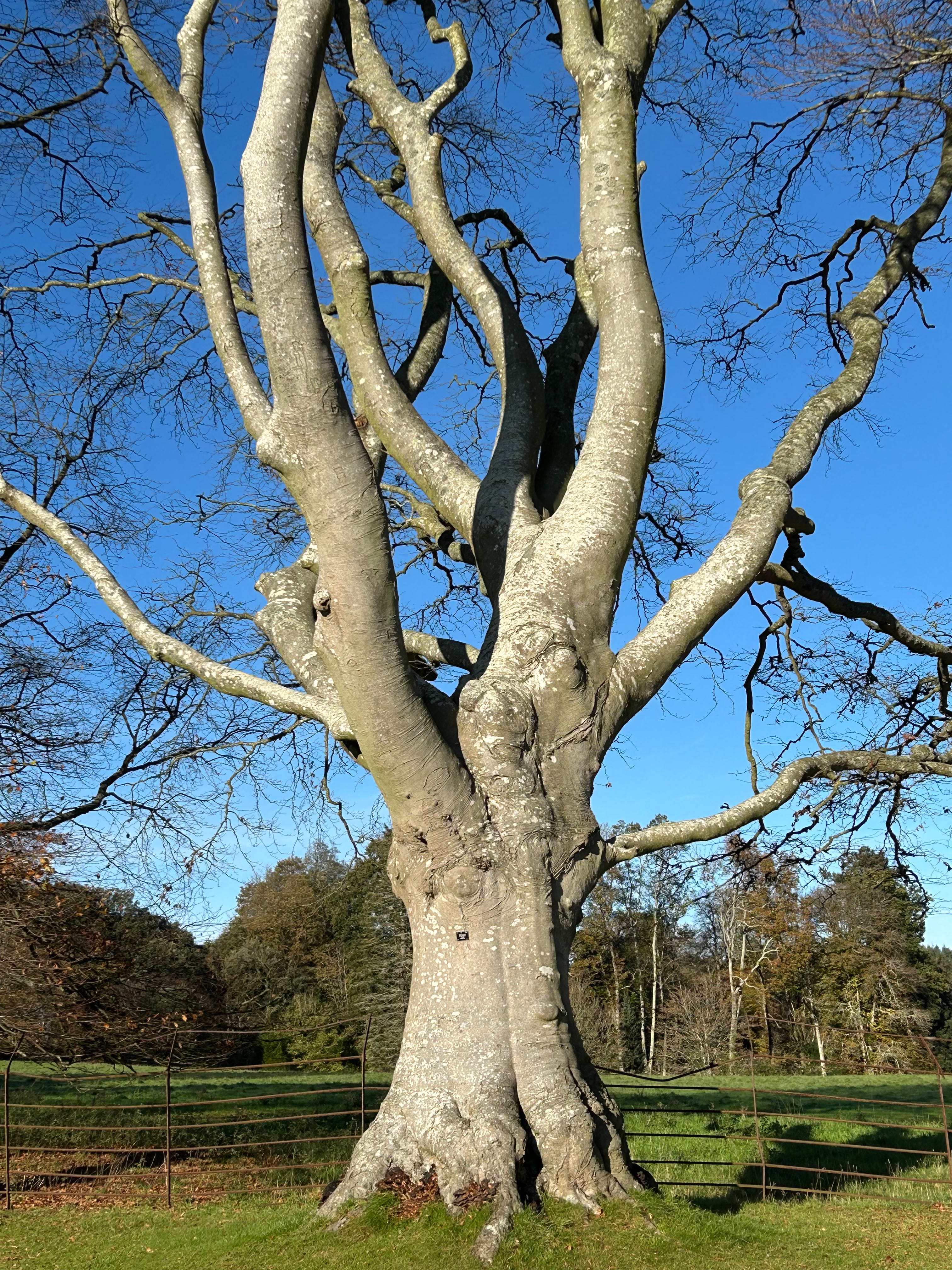
In folklore it (she?) is known as the Queen of the Woods, consort to the Oak King, and associated with femininity, knowledge and memories. It’s also known as the tree of wishes—if you spot a small fallen beech branch, write or scratch your wish on it and then bury it in the ground, faeries may come along and take your wish-branch down to their own Queen, who will consider your request and maybe even grant it. Before the invention of paper, early Germanic cultures used thin slices of beech wood to write on. The Anglo-Saxons called it ‘Bok’ and in Swedish ‘bok’ means both book and beech. Apparently, Helen of Troy carved her lover’s name on a beech tree—I assume something like ‘H loves P 4ever’, only in Spartan. It was thought to ensure a long relationship. Beech was used for dowsing rods in the eighteenth century and a distillation of tar from the bark made a glue and an antiseptic. And who remembers Beech Nut chewing gum? Disappointingly, it has nothing to do with the beech tree at all. 😆
The gorgeous weather also produced this combination of frost, shadows and sunlight; and these ghostly impressions of leaves on the path, which I LOVED..


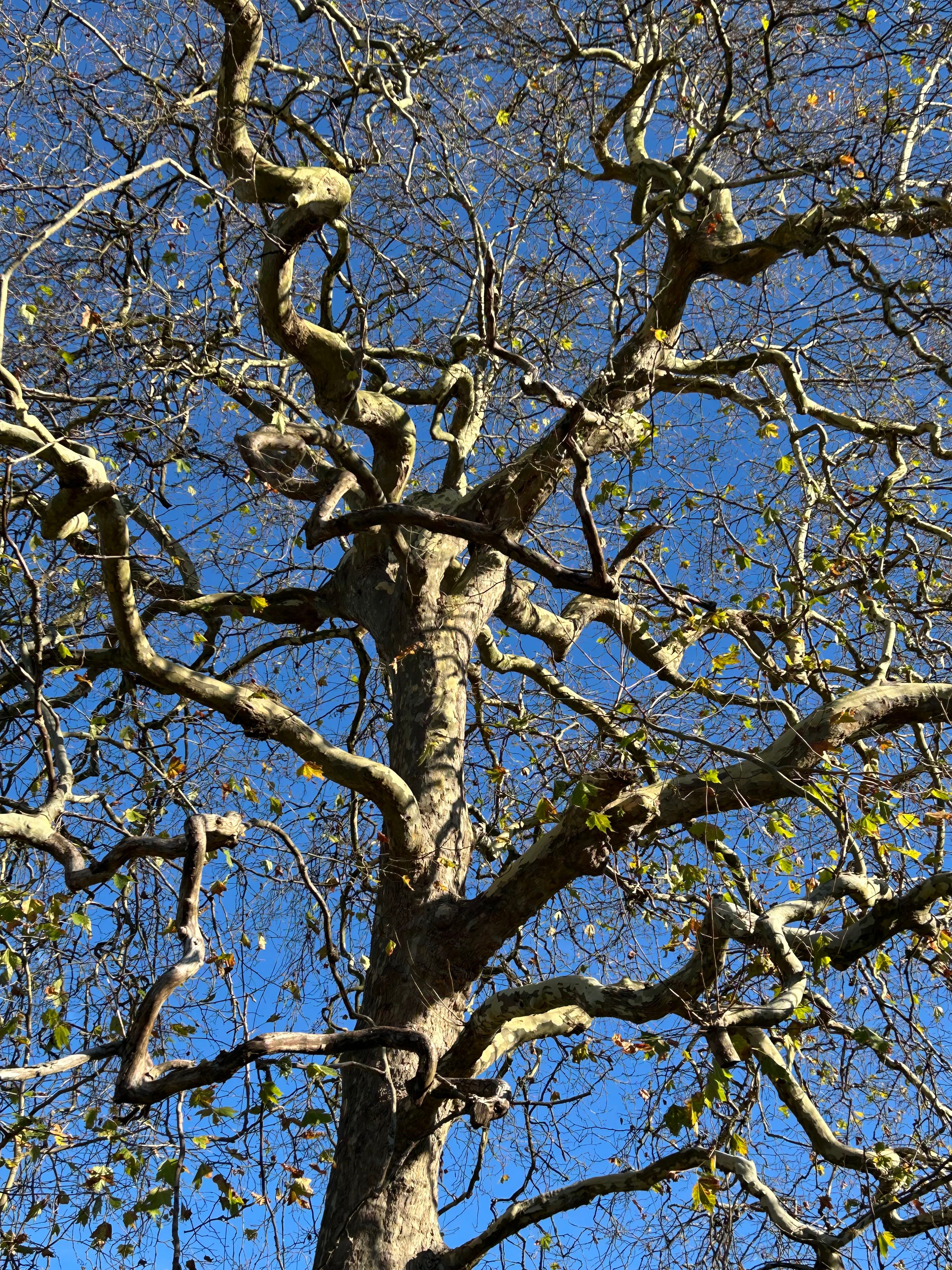
And from down on the ground to up to the heavens, I couldn’t resist pointing the camera upwards and photographing these curly-wurly, serpentine branches of a London plane tree. How beautiful is that? Does it remind you a bit of Raggetty or Old Grimnasty in Rupert? They used to scare the wits out of me.
This week’s reading
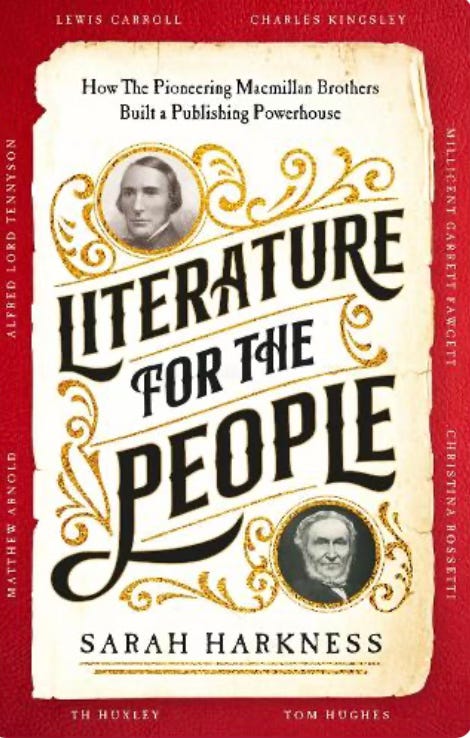
I’ve just finished Sarah Harkness’ book ‘Literature for the People’ about the beginnings and rise of the Macmillan publishing house. She traces the story of Daniel and Alexander Macmillan with a measured, humane clarity. Harkness begins with their modest beginnings in the Scottish Highlands and follows their journey into the heart of Victorian London, showing how two young men—armed with little more than conviction and an unshakeable belief in the value of education—set out to make books available to those who had long been excluded from them. Their Christian-socialist principles inform every decision they make, grounding the narrative in a strong sense of purpose: literature, they felt, should be a public good, not a privilege.
Harkness also attends to the relationships that shaped their work. The Macmillans published some of the period’s most influential voices—Lewis Carroll, Thomas Hardy, Charles Kingsley, Christina Rossetti—and the book explores these partnerships with an eye to both the creative energy and the friction they produced. (I was thrilled to read about the contribution of Norman Lockyer who was crucial to the beginnings of the journal Nature. Our little seaside town has a small astronomical observatory that is named for Norman Lockyer and I had no idea he was such an important publishing figure). Yet the biography never loses sight of the brothers themselves: Daniel, whose ill health sharpened his urgency, and Alexander, who carried the practical burdens of a rapidly expanding enterprise. Their successes are interwoven with loss, challenge, and a persistent determination to do work that mattered.
By the end, Harkness positions the Macmillan brothers as idealists who managed, through patience and principle, to reshape the literary landscape. Their legacy is not simply a publishing house that grew into a global force, but a reminder of what can be achieved when access to knowledge is treated as a social responsibility. It is brilliantly researched (the notes sent me off all over the place for more reading), engagingly written, and is a deeply human story—the brothers bore more than their fair share of personal tragedy, but through it all they never lost their original motivation. I really enjoyed it. Strong recommend.
Last week I said I would write about the TV show The Game of Wool. I’m sorry, but I just can’t. It’s bad. And not in the way that some TV programmes are so bad they’re good. It is ALL WRONG in almost every way. Host dressed like a storm in a yarn shop, some contestants that CAN’T ACTUALLY KNIT, challenges that make no sense at all for knitted fabric, timescales that work against quality knitting…truly, it is awful. But, for some reason, I keep watching it every week in the hope that something will be worth the time and effort. Sigh.
And I’m leaving it there for this week. Take care and I’ll write again soon.

I too much admired Sarah's book, that abiding sense of a MORAL purpose - as you say - within the Macmillan venture. Made me long for something of the kind to return. Moral rather than political.
Here's to your returning strength! Sorry you had such a bad go of it.
"On Tuesday from the cliff top one could see the whole width of Lyme Bay set out under a pale blue sky; from the flat shadow of Portland in the east to the dark smudge of Start Point in the west. The sea flat calm, local fishing boats moving slowly through the grounds."
These beautiful words brought tears to my eyes, June. Lyme Bay has a special place in my heart.
And I'm a fan of moules frites, so the mussel farms were good to read about too!