

Introducing Lady Fortescue

Hello, friends. I hope you are having a quiet weekend, doing whatever you do through Hallowtide. Personally, I don’t hold with the ‘trick-or-treating’ thing but I do spend a little time remembering those I loved who have died, and in a celebratory rather than a maudlin way. So whatever you’ve been doing, I hope it was okay for you. 🙂
A couple of weeks ago I said I might post about Lady Winifred Fortescue, actress, designer, journalist, property restorer, author, garden maker and something of a forgotten writer these days. I enjoy her books, and have several on my ‘keeping’ shelf - they are always worth a reread. She wrote seven books of memoir, her best known probably being ‘Perfume From Provence’ and ‘Sunset House’, telling of her time living in southern France, restoring tumble-down cottages, making a garden, and getting to know the locals. They are quiet, unassuming books, and delightful for it. Her other books focus on her early married life and later the depredations of the second World War on her beloved adopted France and the struggle to regain peace and a measure of normality. So, here is a very short biog - maybe someone might like to write a formal one?
Winifred Beech was born on 7th February 1888 in the rectory of Great Bealings, Suffolk. She was her parent’s third child of four, and money was tight for the family of a country rector. When she was seventeen, needing to earn a living and ease the continuing strain on family finances, she was advised by Consuelo Vanderbilt, then Duchess of Marlborough, to become an actress. I have no idea how she came into the orbit of the D of M, but in spite of this seeming to be a surprising suggestion for a young woman in 1905, her parents agreed and Winifred went off to train at F R Benson’s Dramatic School. She joined Sir Herbert Beerbohm Tree's company, and performed in numerous plays in the West End and on tour, including George Bernard Shaw’s Arms and the Man and You Never Can Tell and Goldsmith’s She Stoops to Conquer. Reviews were very positive, and after her performance as Gloria in You Never Can Tell, The Varsity went so far as to say:
“Miss Beech is without doubt an actress of exceptional ability,. and the fact that her performance was so thoroughly natural shows how carefully it must have been studied. A University critic has prejudices no less than anyone else, but we confidently expect to see Miss Beech gain higher laurels for her undoubted talent and charm”.


She met her future husband, John Fortescue, in 1911 at the home of Thomas Hardy, of all places. She had been taken by friends to a tea party at the home of the esteemed writer, and they met across the proverbial ‘crowded room’. John was 28 years older than Winifred, worked as the King’s Librarian and Archivist, and was working on a commission from the publishers Macmillan to write a history of the British Army—a task that would take him 36 years. In 1914 they married and she gave up the stage, first sharing John’s rooms at Windsor Castle and then renting a house in Hampstead. John was the fifth son, and ninth of fourteen children of the 3rd Earl Fortescue, so there was no family money for him, and money (or lack of it) problems would dog the rest of their lives. In order that John need not give up his life’s work writing about the Army, Winifred determined to start a business that would bring in some income. In 1920 she founded ‘Cintra’, which became a successful interior decorating and dress designing business. The Times, May 7th 1921, reported on one of Winifred’s mannequin shows:
“ One of the most charming frocks shown on mannequins at the parade was an Ascot gown of ecru lace and georgette, with a beautifully arranged sash. A gown of kilted magnolia murano lace over magnolia georgette had a quaint wrap of jade devetyn lined and faced with magnolia zenzolini silk. Wraps are a strong feature of Cintra’s show, and she appears to have an instinct for blending lovely fabrics and gets rich colours to agree in unaccustomed harmonies.”
I’ve only been able to find one picture of her creations—it looks rather risqué!
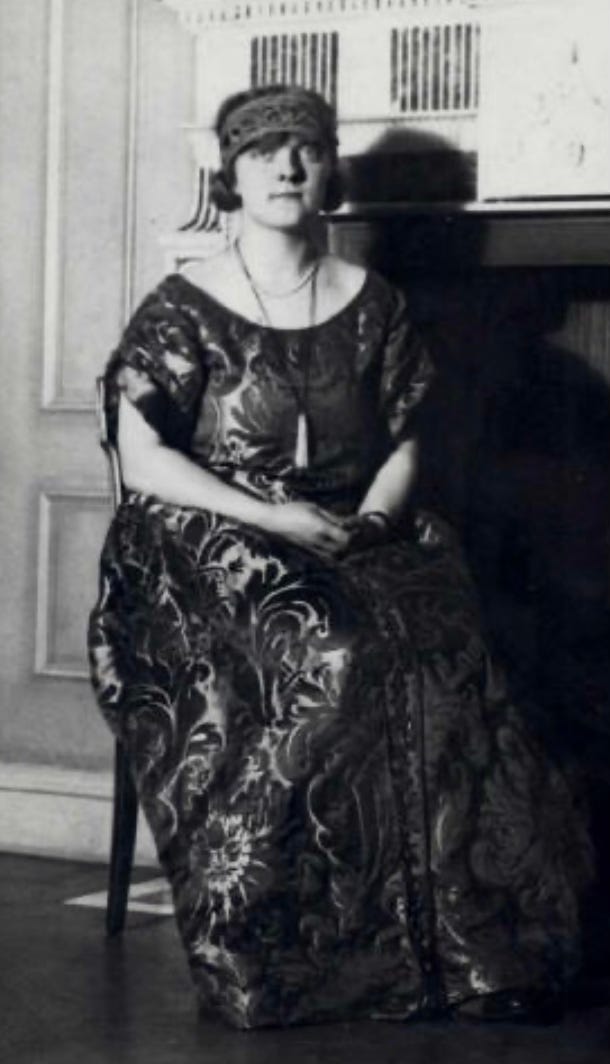
Such was Cintra’s success that Winifred held a fashion show at the Plaza Hotel, New York on 9th November 1922. She acted as MC for the show and the New York Times reported on her own outfit the following day:
‘A swathed, sheath-like, sleeveless, dress of black chiffon velvet with an exaggerated train ending in a point. From one bare arm, just above the elbow, hung a long black chenille tassel with an acorn-top of brilliants. Her head was capped with a close fitting black velvet turban from which two long ostrich feathers, held by a diamond star, curled to the waist. She wore one huge marquise ring of brilliants, diamond buckles on her black velvet shoes, and carried a slender black-tasseled stick with a diamond knob.'
Wow! It sounds frightfully up to the minute, I especially love the idea of the two long ostrich feathers, curling to the waist. How glamorous she was!
Winifred’s fragile health didn’t stand up the rigours of running a busy enterprise however, and in 1922 she gave up the business and turned to journalism, writing for The Evening News, The Times, and Punch magazine, and later on starting and editing a Woman’s Page in the Morning Post, all of which helped to maintain their income stream. John was knighted for his work as the Royal Librarian in 1926 and Winifred became Lady Fortescue.
After losing what little money they had in the stock market crash of 1929, Sir John and Lady Fortescue sold up and made the move to Provence—partly for health reasons, and partly because life was cheaper and quieter there. They restored an old house, La Domaine, and created a home and beautiful garden in the hills around Grasse. John lived for just two years after their move to Provence, but Winifred now regarded it as home and settled to continue her writing career. She moved from the larger house they had renovated together (money was extremely tight now) and managed, with some difficulty, to buy an old, neglected stone cottage near Opio. She set to, re-building another home in the hills. Her first book, the best-selling Perfume From Provence tells of those early days renovating La Domaine and settling in, and her second, Sunset House, tells the story of the rebuilding of the tumble-down cottage, her close friendship and exploits with neighbour Elizabeth Starr, and life in the village. Her autobiography, There's Rosemary, There's Rue, was published in 1939 and recreates the excitement of her time as an actress, meeting and marrying John, and their life living in Windsor Castle during the reign of George V and Queen Mary. Many famous names float across the pages and Winifred’s nostalgic writing is witty and engaging.
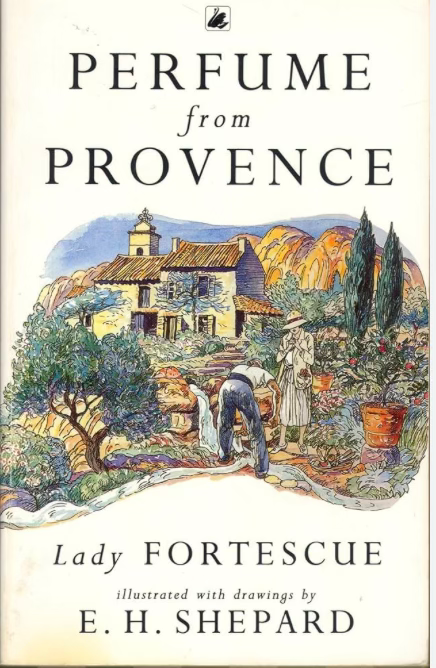
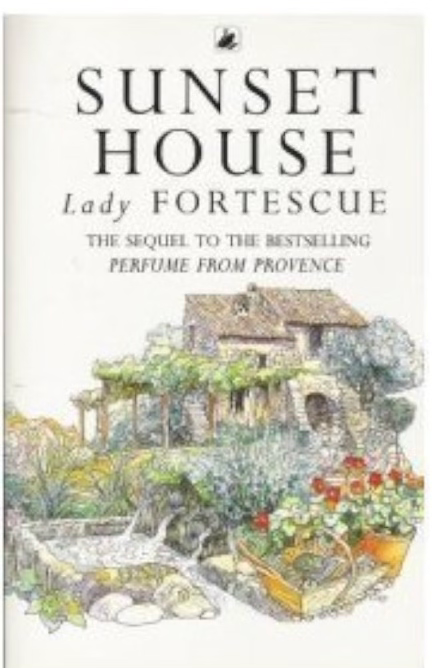
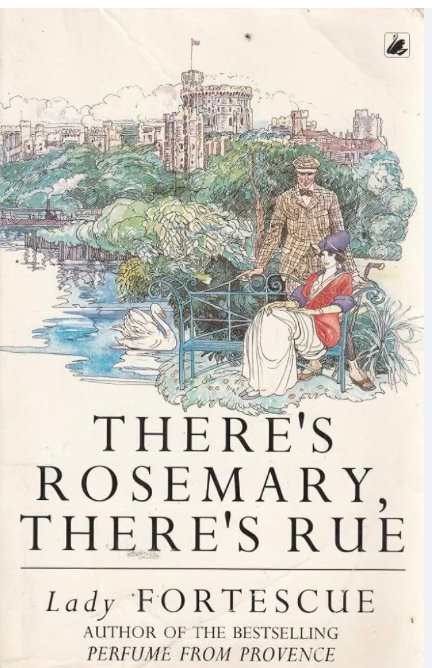
Life became frighteningly turbulent after war was declared in 1939. Winifred opened her small home to exhausted soldiers from the Mobilisation Générale, and worked with Elizabeth to organise places of shelter for them throughout Alpes-Maritimes. In 1940 after Italy entered the war, Winifred had to leave Provence before she could be detained as an alien; she made a terrifying car journey through the length of France, finally managing to board the last boat to England at St Malo, just before France fell to the invading German troops.
For the duration of the war she lived a somewhat peripatetic life, staying initially in a cottage on an estate in Surrey, spending time at John’s family home in North Devon, and for some of the time living in a small touring caravan. Still writing, she also tirelessly raised funds for the Free French. Her friend Elizabeth, living under the oppressive Vichy régime and exhausted by the struggle for survival, died in 1943 of starvation.
Winifred’s books Trampled Lilies and Beauty for Ashes cover the duration and aftermath of the war in Provence and provided the platform through which she was able to fundraise.
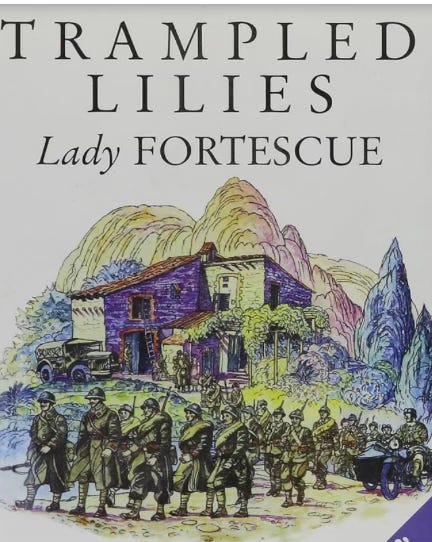
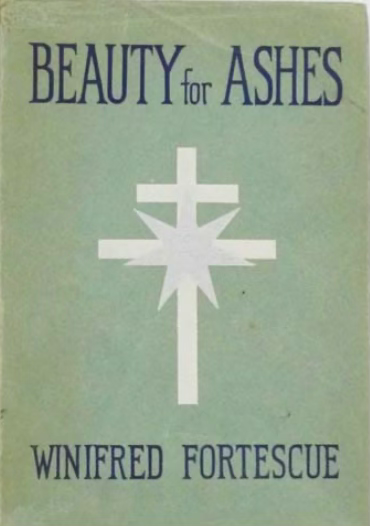
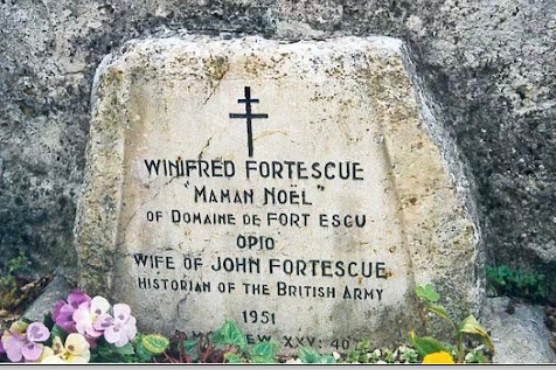
These last two books describe the circumstances people were living under and, supported by her readers, she was able to provide considerable basic help to the area. As soon as she could after war ended in 1945, she returned to Provence and her little house in the hills and worked distributing medicines, provisions and clothing to the people of her village and its surroundings, friends and neighbours who were starving and devastated by war. The frequent sight of her, laden with packages, visiting those who most needed help, resulted in her nickname ‘Maman Noël’ - Mother Christmas.
Her final book, Laughter in Provence, published in 1951, is a testament to the resilience of her adopted land, and her joy at its return to some degree of normality, even though it was changed forever. Her tone is optimistic and thankful for the happiness this part of France gave her.
Winifred died in April 1951, aged just 63. She was buried in Opio, close to her friend Elizabeth.
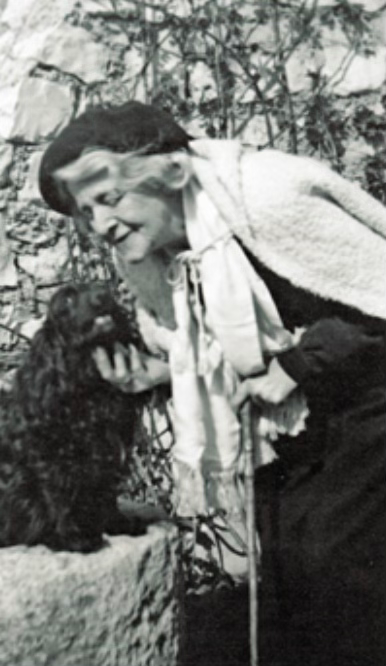
I hope you enjoyed this look at an author who deserves to be more widely known. Her books are of their time, and all the more enjoyable for it. She writes in a voice full of love for her adopted country, is amusing, engaging, and funny, even in tough times.
And that’s it for this week. I’ll write again soon. x

Thank you for introducing me to Lady F. I will enjoy the reads 📚 😊
I hadn’t heard of her. Thanks for the introduction. I must find her books!