

A semblance of normality

A week gone by. The primroses are coming out. There’s rain and sunshine. The world keeps turning and we keep turning with it. Thank goodness, the seasons pay no heed to our personal catastrophes but just keep inexorably pushing onwards, so that unless we deliberately detach ourselves from reality we must move forward too. The primroses and the sharp, green points of the daffodils, and the clear yellow early aconites speak of the future and I hear them. There are mahonia flowers and a mimosa in bloom in the Botanic gardens. So much yellow. There is much lifestyle change going on here. Better diet. Gentle weight loss. More exercise. Cooking from scratch. Looking forward. A is recovering well—doing more and more each day, good appetite, keen to make the changes he needs to make. I am less stressed but the niggling fear remains at the back of my mind. Concentrate on the future, I tell myself, one day at a time.


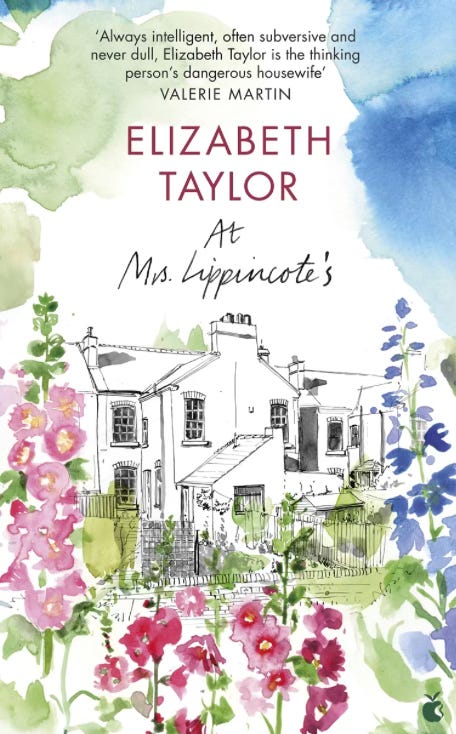
I am reading again and making use of the Reading Journal I had for Christmas. I have just finished Elizabeth Taylor’s At Mrs Lippincote’s (1945). It’s a subtle, finely observed novel about marriage, displacement, and quiet emotional strain during wartime. Set in a damp, rented house near a military base, it follows the constrained lives of husband and wife Julia and Roddy Davenant, their 7 year old son Oliver, and Roddy’s cousin Eleanor, living with them after a breakdown. Unspoken resentments circle around and thwarted desires surface under the pressure of temporary living and mis-matched social expectations. Roddy is in the RAF, he is conservative, detached and wants his wife to be like ‘other wives’—conforming and secondary. Julia is independent-minded, literary, unpredictable. Eleanor feels stifled, and resentful, adoring of Roddy and irritated by Julia. Oliver has an old head on his young shoulders. When things come to a head in a mix of frustration, bitterness, faithlessness, and searing honesty, it is Julia who is unexpectedly the calm, resigned centre, holding her family together. Taylor’s prose is elegant and understated, revealing character through small gestures and silences rather than dramatic events. There is humour and pathos, and as so often with Taylor, children provide pin-pricks of light relief. The novel’s power lies in its psychological acuity and its compassionate yet unsparing portrayal of domestic unease, it is her first novel but an assured example of Taylor’s distinctive style. There are some glorious quotes, my favourite comes right at the end:
‘“There’s no love in this house,” cried Eleanor. “There never has been. You’ve despised me always and gone to very little trouble to disguise your…”
“Despision,” said Julia gently. She was in a fiendish mood.’
I felt the wickedness in the uttering of ‘Despision’, the mocking contempt from Julia towards Eleanor brilliantly done in just one word. I really enjoyed …Mrs Lippincote’s and am about to embark upon Taylor’s Mrs Palfrey at The Claremont next—after a brief foray with a Julia Proctor mystery from Ann Bridge, another favourite.
I’m also finally starting on Ian Collins’ biography of Ronald Blythe Blythe Spirit (could he not think of a better title?). It has been sitting on my non-fiction TBR pile for a few months. I’m a big fan of Blythe’s writing, from Akenfield—the story of an English village told through its residents and the book that made him famous—to his Words From Wormingfold column in the Church Times which carefully notes the cycle of nature’s year, with a background of Church of England festivals and litany. His writing voice is poetic, soft even, with cadences resonant of his beloved Church readings. The 2024 collection of his writings, Back To Nature, is a wonderful book, embedding the reader in the Suffolk countryside he called home for more than 100 years. So, it is with fondness and expectation that I begin Collins’ biography. When I’ve finished I shall, of course, write about it here.
I am currently unable to concentrate enough to start my next knitting project, a colour-work waistcoat. Instead I have dug out some old cotton yarn and am knitting dishcloths and face flannels. Simple garter stitch 10inch squares. They don’t take long, they keep me occupied and I feel productive. And they’re useful and look prettier on the sink than a scraggy old j-cloth. Also on the household front, I have invested in an Instant Pot, after reading India Knight and Melissa Harrison extol their virtues. I bought the smaller one. It’s huge and crouches on my worktop like some robotic Shelob. I haven’t tried it yet. I’m waiting for a recipe book to arrive then it shall be christened. Even more exciting I am seeing a potential cleaning person on Friday to give us a bit of help in the house. I’ve been meaning to do this for ages but was in a state of horror at the thought of finding someone and letting a stranger go around the house. Although I guess it’s no different from having a plumber in, or some other sort of work person. Anyway, we shall see.
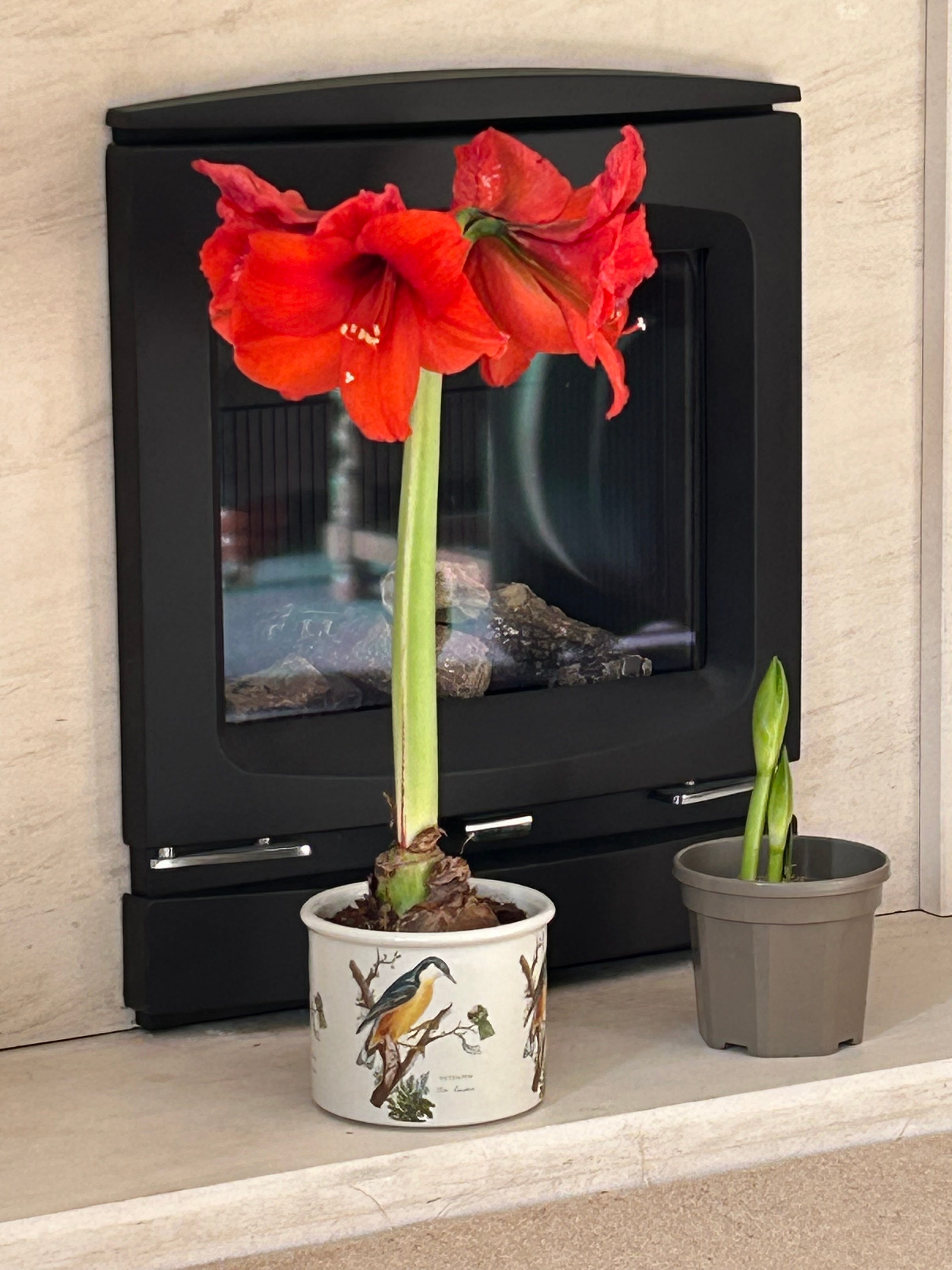
Such is my little life at the moment, taken up by domesticity. This amaryllis is cheering me, left over from Christmas. Isn’t it gorgeous? That pot it’s in must be over 40 years old. It’s the Portmeiron Birds of Britain series, and that’s a Nuthatch.
And that’s it for this week. Some semblance of return to normality, I hope. Take care, and I’ll write again soon. x.

Good to hear your husband is making a steady recovery June. I read Mrs Palfrey at the Claremont just before Christmas and really enjoyed it. She is such a wonderful writer of characters and their interactions.
So glad Mr G is on the mend and progressing well 😊 Lovely uplifting post.